Stuffing the first board (with the parts I actually own)
The boards are here. Last time I'd sent five off to PCBWay and the post ended on a render with the honest admission that none of it had met a soldering iron yet. Now five real boards are sitting on my desk — black, because I picked black at order time, and they look exactly like I hoped a first board would.
And then I tried to actually build one.
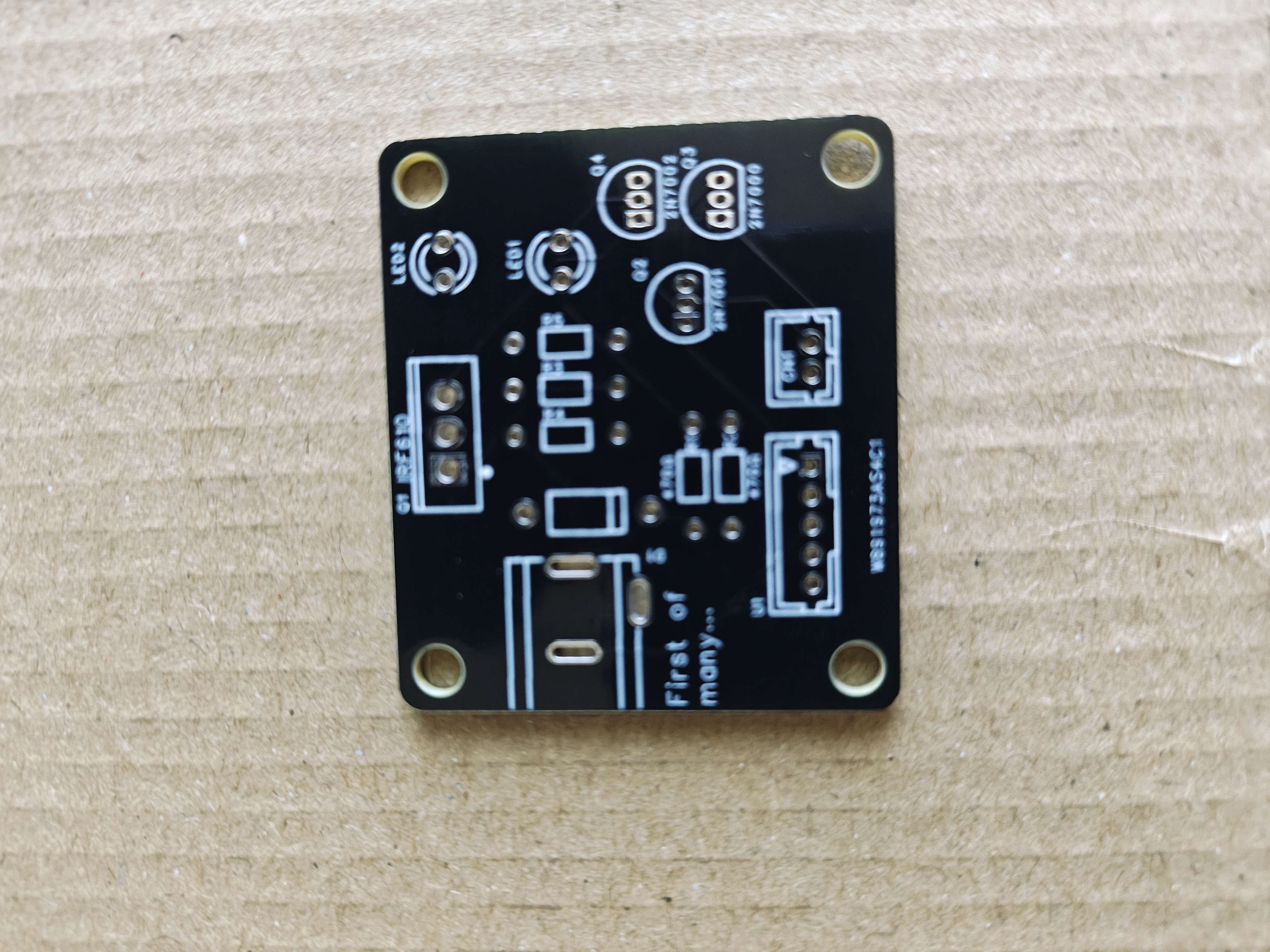
A bill of materials I apparently can't read
The first thing I learned is that designing a board and owning the parts to build it are two completely separate skills, and I have exactly one of them.
I'd drawn the switch and valve connectors as JST PH. I do not own a single JST PH connector. What I own is a bag of JST XH — same family, 2.5 mm pitch instead of 2.0, which means they emphatically do not go in PH footprints. So that's a PH connector kit ordered off Amazon.
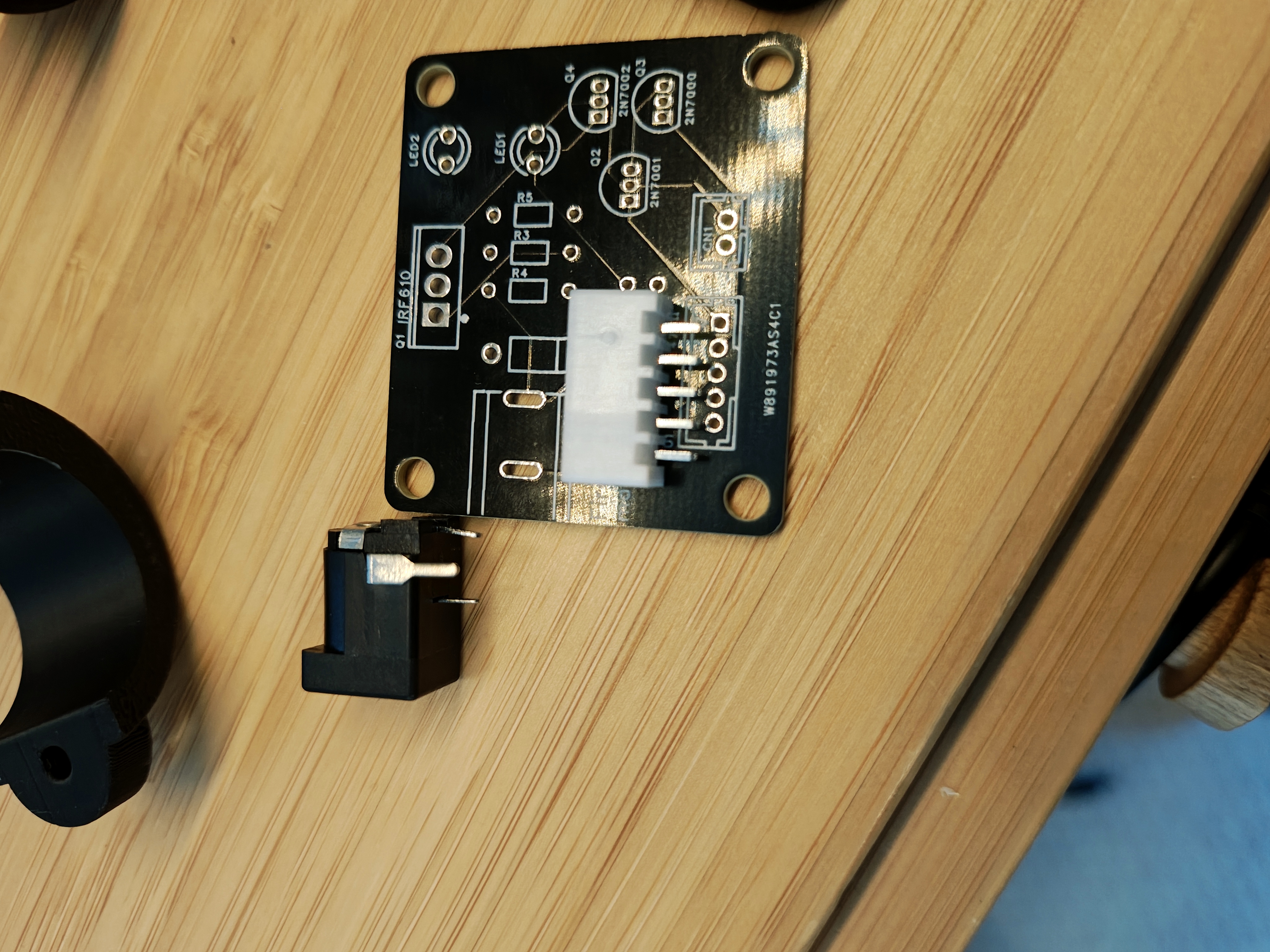
Then it got worse. The flyback diode — the one Claude talked me into adding so the motor's back-EMF doesn't kill the MOSFET? Don't own one of those either. The resistors? Also not in any drawer. I had carefully placed parts in the schematic as if my parts bin were a fully-stocked Digikey, and it is in fact a small box of whatever I've had lying around.
The diode is the one that stings, because I didn't even pick it myself — I added it on advice and then didn't own the thing I'd been advised to add. The PH kit, the diode and the resistors all went on the same order. Lesson filed: check the bin before the schematic, not after the boards arrive.
The great solder hunt
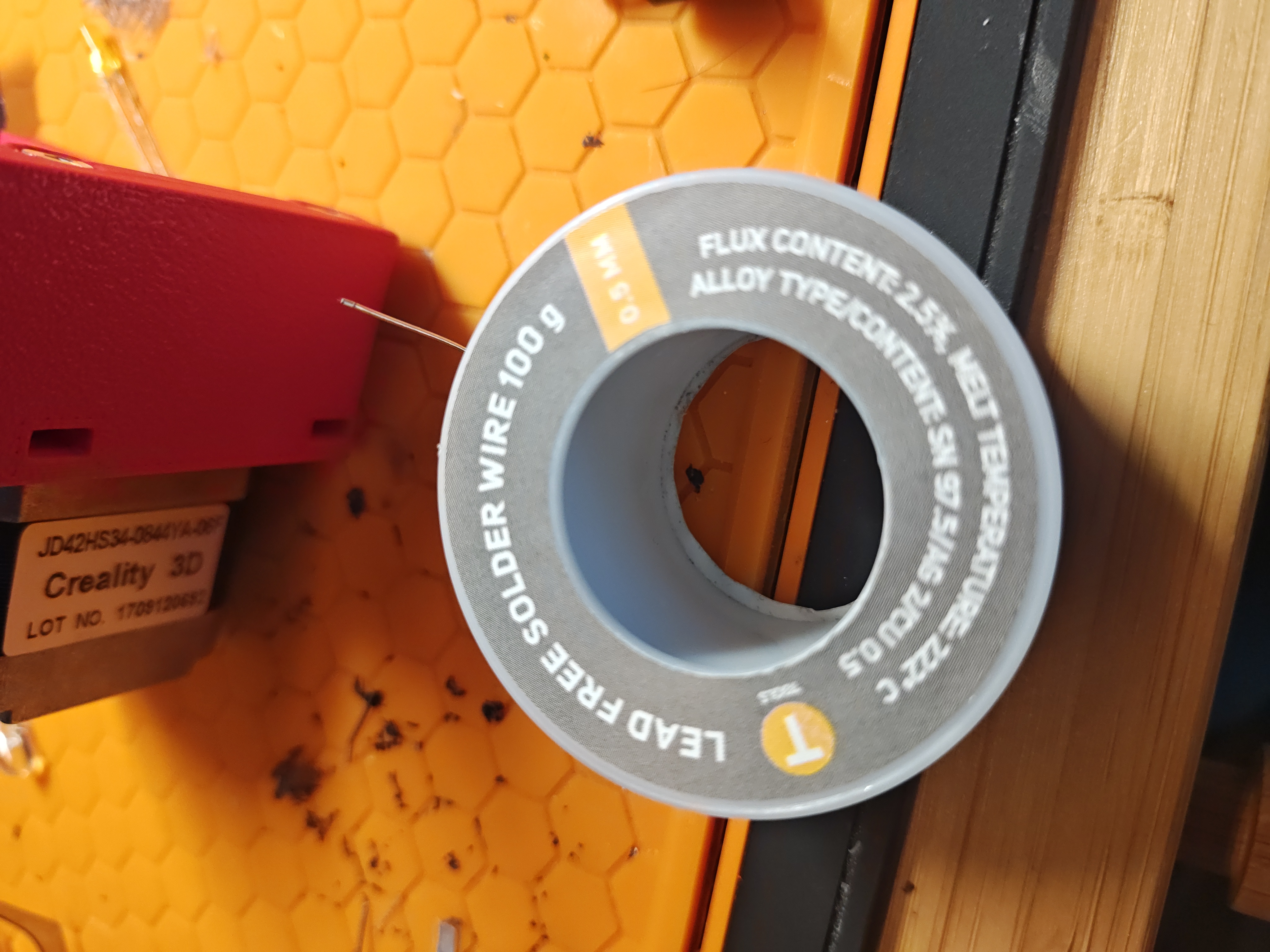
While I was failing to own components, I was also fighting my solder. The reel I had is some no-name lead-free wire off Temu, and it is genuinely awful — it doesn't wet, it balls up, it sits on the pad sulking instead of flowing. I'd assumed for a while that I was just bad at soldering. Turns out some of it was the wire.
So I went looking for something decent, and discovered that the solder I wanted was stocked in exactly three Kjell stores in the whole country. Two of them are about 1500 km north of me. The third is a 20-minute drive from home. I have never been so grateful for retail inventory geography in my life — I took the close one.
It's a 100 g reel of lead-free 2 % silver wire, and it cost me about €35. That is an absurd amount of money for 100 g of metal when you're used to Temu prices. It is also, the moment it touches a hot joint, completely worth it.
| Spec | Value |
|---|---|
| Alloy | Sn 97.5 / Ag 2.0 / Cu 0.5 (lead-free) |
| Diameter | 0.5 mm |
| Flux core | 2.5 % |
| Melting range | 217–227 °C |
| Spool | 100 g |
| Price / source | ~€35, Kjell (in-store only) |
Soldering what I had
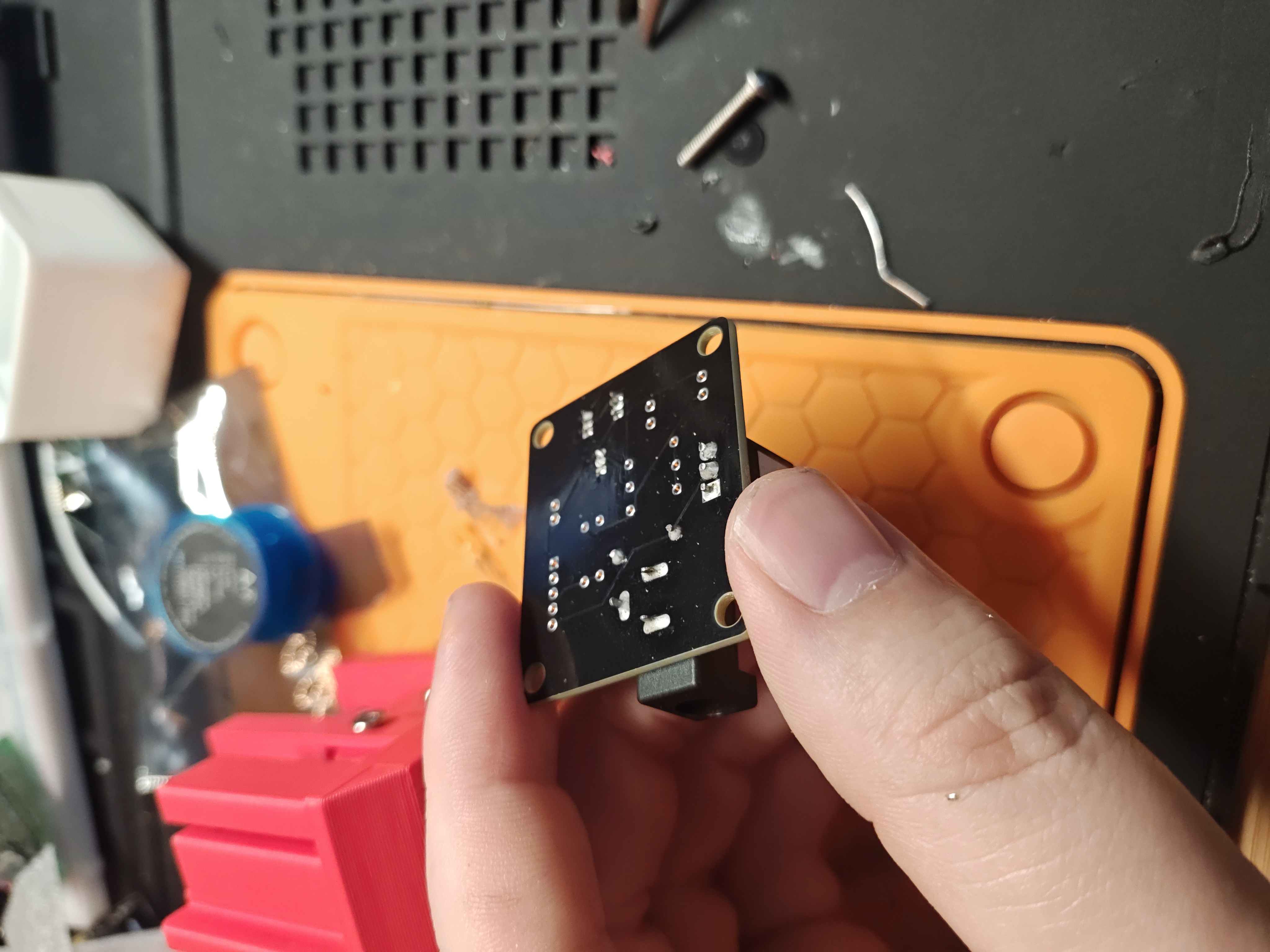
With half the BOM in the post, I built what I could from the parts already on hand. The barrel jack went on, then the IRF610 power MOSFET laid down with its tab to the edge, then the three little 2N7000s, then the two indicator LEDs. The connector and resistor footprints stayed bare for now.
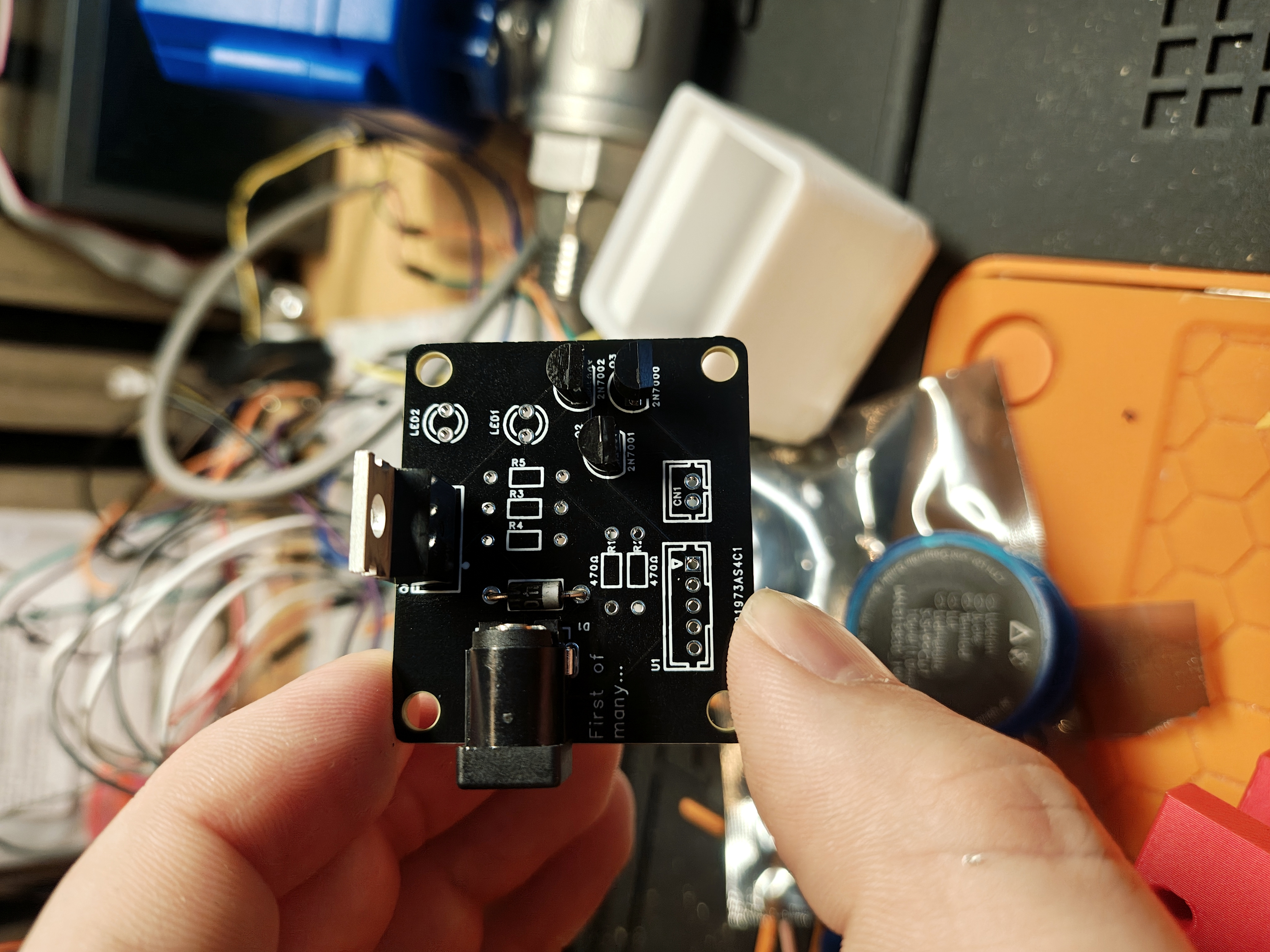
The one part that didn't make me wait was the diode. I'd braced for the whole Amazon order to arrive in one box, but D1 turned up on its own the day after I clicked buy, well ahead of the rest. It's a plain DO-41 axial part, so it took about a minute to bridge across the motor terminals — you can just pick it out in the photo above, hiding in the shadow of the barrel jack. The connectors and resistors are still in the post, due Friday.
And the new solder is night and day. It wets the pad and pulls up the lead the instant the iron makes contact — no balling, no sulking, no wondering whether the joint is cold. The first few I did with the good wire genuinely felt like I'd swapped irons, not spools. It turns out most of my "bad soldering" was bad consumables.
What's next
The obvious next step is the rest of the parcel: when the PH kit and the resistors land on Friday, I finish stuffing the board — connectors and R1–R5 — and then it's the same plan I ended on last time. Put it on the bench next to the CWX-15Q and confirm the real board does what the breadboard did: open, stop, closed, stop.
Same standing caveats: this still hasn't met a Swedish January or a drop of water, and it isn't even fully populated yet. But it has finally met a soldering iron — and a soldering iron with solder that works — so we're at least off the renders. Wi-Fi remains behind the rule that the dumb version has to survive a winter first.